
Strengthening agricultural value chains in Cabo Delgado
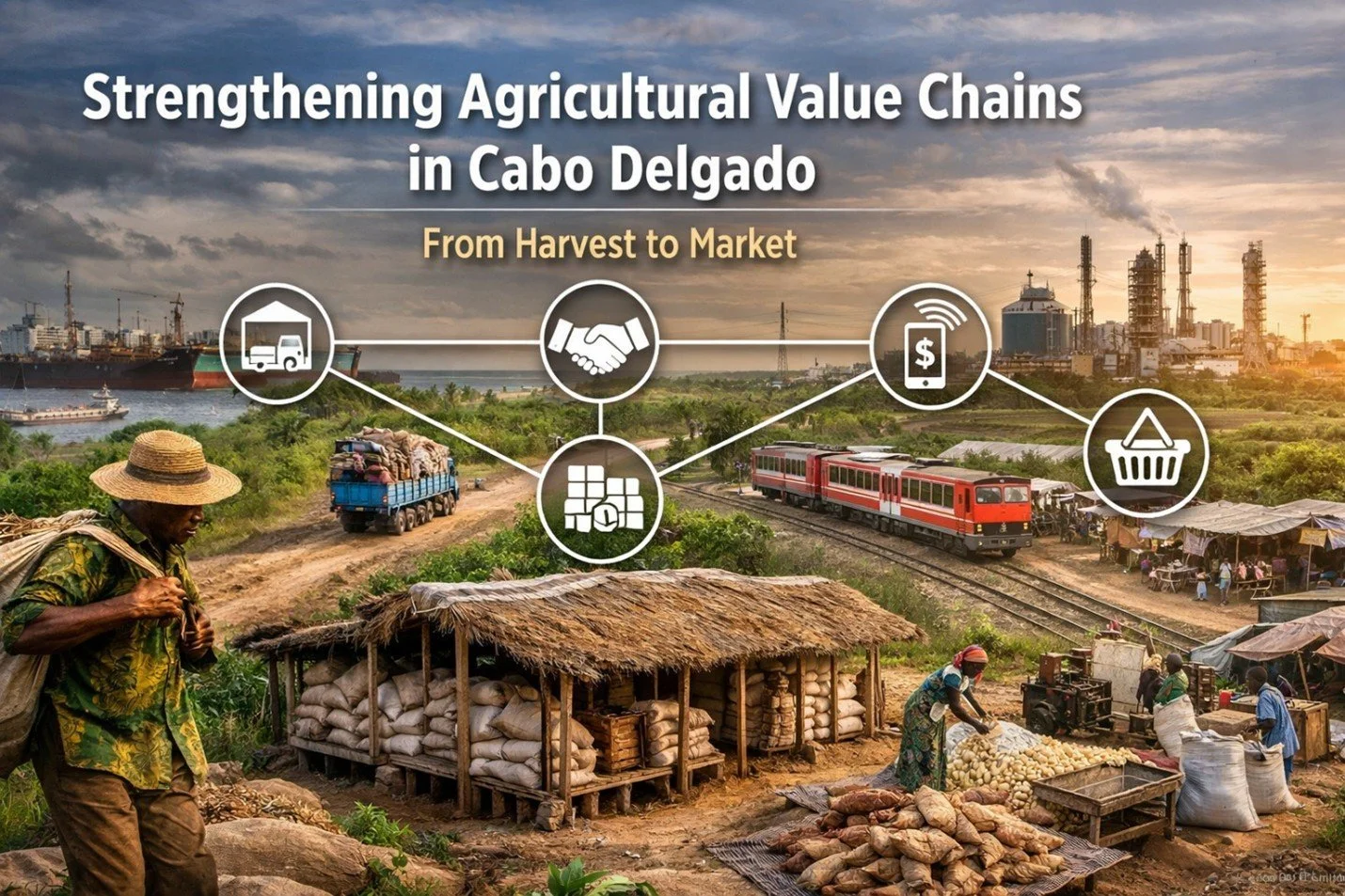

ThirdWay Partners (TWP) is part of the consortium implementing the AgroVida Project, a multi-year initiative supporting smallholder farmers in Cabo Delgado through regenerative agriculture, market integration, and systemic food systems transformation. Within this framework, TWP leads stakeholder coordination, policy alignment, and agricultural value chain analysis to support more resilient and inclusive outcomes.
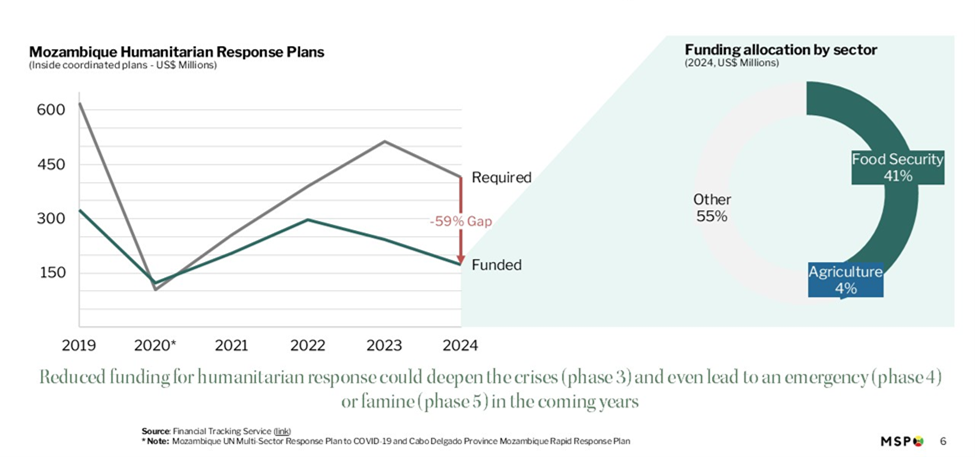
Cabo Delgado’s agricultural system operates under sustained pressure. Years of conflict, population displacement, and climate-related shocks have disrupted livelihoods and production systems. While humanitarian assistance remains significant, with 48% of total funding allocated to food security and agriculture, overall funding levels continue to decline. According to the 2024 Humanitarian Response Plan, a 59% funding gap has placed essential interventions at risk. The challenge is not only one of scale, but of durability. Without sustained, market-oriented investment, districts already classified as IPC Phase 3 (Crisis) risk deteriorating further into emergency or famine conditions.
Illustration 1: Though 48% of humanitarian aid is funneled into food security and agriculture, a continuous reduction in available funds risks hampering its effectiveness
Yet one reality remains clear: Despite these pressures, smallholder farmers continue to produce food. The central constraint facing Cabo Delgado’s agricultural sector today is no longer production capacity, it is the absence of reliable post-harvest market integration.
From production to market: Where the system breaks down
Across Cabo Delgado, farmers cultivate cassava, maize, and rice at scale. However, the economic value of this production is systematically eroded after harvest. Weaknesses across storage, transport, processing, and market access prevent crops from reaching their full commercial potential.
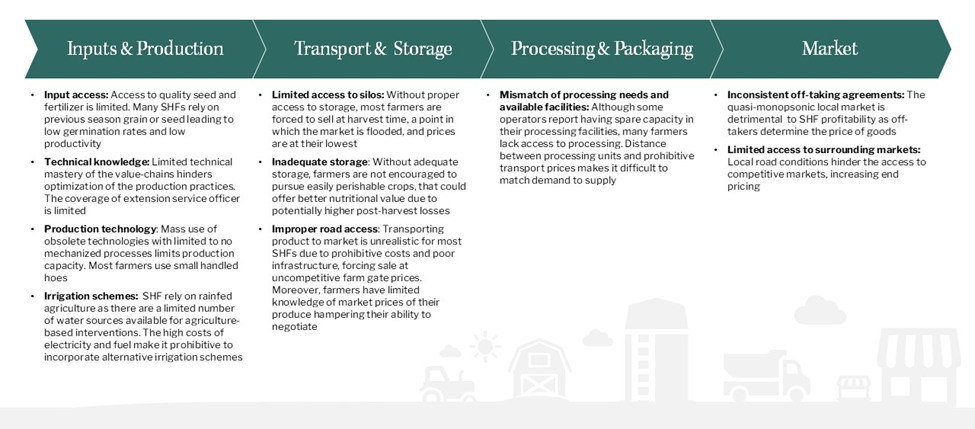
Supply chain mapping conducted through the Multi-Stakeholder Platform (MSP) highlights a set of interconnected failures across the value chain. Farmers face limited access to quality inputs and production technologies; transport and storage infrastructure is inadequate; processing and packaging capacity remains minimal; and markets are fragmented, informal, and characterized by weak contractual arrangements.
Illustration 2: Various market failures across value chains further threaten communities' livelihoods
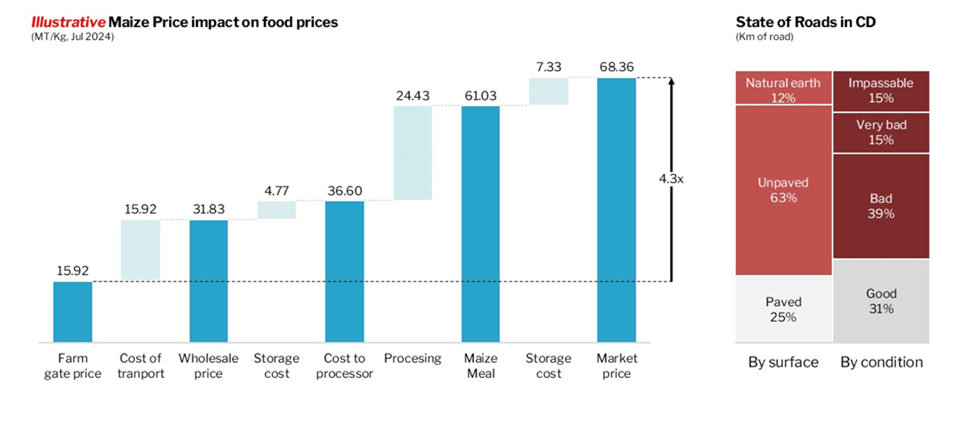
These constraints reinforce one another. With few storage facilities available, farmers are forced to sell immediately after harvest, often at depressed prices. Poor road conditions, with only around 30% of the network in good condition, significantly increase transport costs, in some cases raising prices four- to five-fold between farmgate and market. The absence of reliable off-take markets limits farmers’ ability to reinvest, expand production, or transition from subsistence to commercially viable agriculture.
Illustration 3: The state of the roads and lack of proper storage increase the price by 4-5 times; only 30% of roads are in good condition
Taken together, these failures create a low-investment equilibrium in which farmers are rationally locked into subsistence production, despite continued demand for food in local and regional markets.
Investment priorities: Shifting from production to market integration
Strengthening agricultural value chains in Cabo Delgado requires a deliberate shift in investment focus. While production support remains important, the highest-impact opportunities lie post-harvest, where relatively modest investments can unlock disproportionate gains.
Four priority investment areas emerge from the analysis:
Illustration 4: Strengthening these value chains will require significant investment across all of Cabo Delgado’s circle, with emphasis on the transport and storage
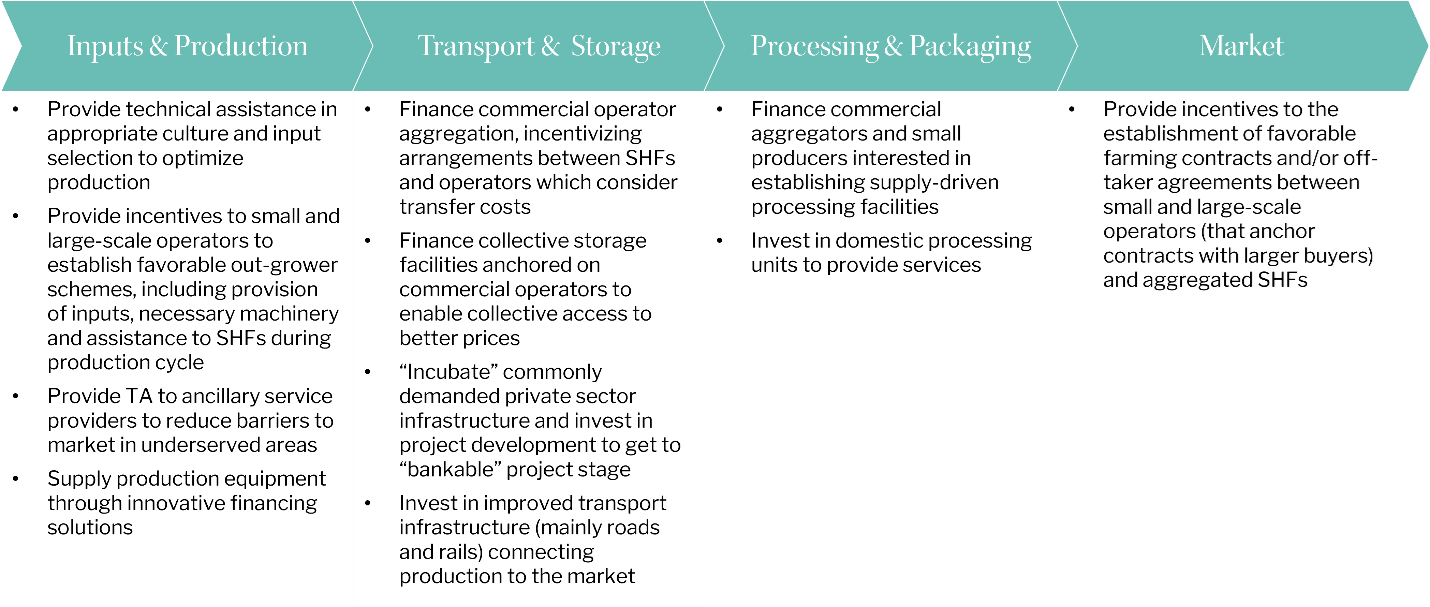
These investments are mutually reinforcing. Without coordination across all four, isolated interventions are unlikely to deliver sustained impact.
Linking producers to demand: Evidence from the AgroVida market linkages workshop
A practical illustration of this approach is the AgroVida Market Linkages Workshop, which convened smallholder farmers, local aggregators (wopolas), emerging producers, government representatives, and private sector buyers. The objective was to close the persistent gap between local production and growing market demand.
Participants assessed regional production trends alongside emerging demand, including potential opportunities linked to the LNG sector, which is expected to generate over 10,000 direct jobs and significantly increase demand for food services. The discussion highlighted common constraints; price volatility, limited storage, lack of financing, and complex certification requirements but also underscored the role that anchor buyers can play in stabilizing the system.
Several practical pathways were identified:
Establishing regular dialogue platforms between producers and buyers
Expanding contract farming arrangements to improve farmer margins
Supporting certification and formalization of local suppliers
Piloting tailored financial products, such as input credit and equipment leasing, through outgrower schemes
A key highlight was the presentation of the Praça Virtual AgroVida, a digital platform under development that will support field monitoring, connect producers with buyers, and expand access to pricing information and agricultural best practices. By improving transparency and reducing dependency on informal intermediaries, the platform is expected to enhance supply chain efficiency and strengthen commercial linkages.
Several preliminary agreements were reached during the workshop. Companies such as ETG, Pemba Fresh, and Avani Hotel made verbal commitments to source local crops including maize, sesame, beans, and vegetables. Some buyers also expressed interest in land rental partnerships with project beneficiaries. TWP and the AgroVida team will continue to monitor the implementation of these agreements and facilitate further engagement.
What this means for investors and partners
The experience in Cabo Delgado points to a clear conclusion: food security outcomes will increasingly depend on market systems, not emergency inputs alone. For investors, donors, and private sector actors, this implies a shift in focus:
Prioritizing storage, logistics, and aggregation over further expansion of cultivated area
Supporting anchor buyers and contractual mechanisms that reduce risk across the value chain
Deploying blended finance instruments that crowd in private capital while protecting smallholders
Investing in coordination platforms that align producers, buyers, and public actors
The next chapter: Aligning systems for scale
The path forward requires sustained multi-stakeholder collaboration. TWP will continue to play a facilitative and strategic advisory role within the AgroVida project, connecting small-scale producers to markets and strengthening the institutional foundations for food systems governance in Cabo Delgado.
On the market side, TWP is leading activities to connect producers with buyers, including organizing events that facilitate direct engagement and piloting a digital platform to improve information flows and transparency. These efforts are supported by ongoing analysis to better understand buyer requirements and identify opportunities for smallholders to meet demand through improved practices and services. Complementary efforts are also underway to promote local food products and improve household nutrition through community-focused events.
At the institutional level, TWP continues to build partnerships with relevant provincial actors to embed food systems priorities into broader governance frameworks. Activities include co-developing workplans, sharing lessons learned through regular communications, and supporting inclusive participation across communities and local enterprises. While engagement with some stakeholders has faced delays, TWP remains committed to playing a coordination and advisory role, ensuring that local food systems development is aligned, inclusive, and responsive to the region’s evolving needs.